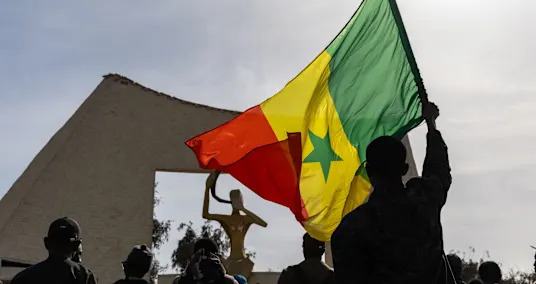
Senegal's President Bassirou Diomaye Faye has signed a new law doubling to 10 years the maximum prison term for sexual acts by same-sex couples.
The new law also criminalises the "promotion" of homosexuality, which includes any public representation and financial support by individuals or organisations, and provides for three to seven years in prison for those found guilty.
The legislation was a campaign promise of President Faye and Prime Minister Ousmane Sonko and was approved by parliament last month.
UN rights chief Volker Türk has described it as "deeply worrying", saying that the anti-LGBT legislation "flies in the face of sacrosanct human rights".
The UN official and rights groups had urged the president not to sign it into law, but the government dismissed the international criticism, arguing that the measures reflected the views of Senegalese people.
It was taken to parliament after a wave of arrests over alleged same‑sex relationships, which were already banned under Senegalese law.
In February, 12 men, including two public figures and a journalist, were arrested and charged with "acts against nature".
Campaign group Human Rights Watch has recently noted a rise in "hostility toward LGBT people", adding that MPs had twice – in 2022 and 2024 - unsuccessfully sought to raise jail terms and penalties against same-sex relationships.
The new law was passed by an overwhelming majority in the National Assembly on 11 March, with 135 MPs voting in favour, none against and three abstaining.
Several other African countries have also introduced tough new laws against the LGBTQ+ community in recent years.
In September last year, Burkina Faso's transitional parliament approved a bill banning homosexual acts, following its neighbour Mali in 2024.
In 2023, Uganda voted in some of the world's harshest anti-homosexual legislation, meaning that people engaging in same-sex relationships can be sentenced to death in certain circumstances.
Ghana is also planning to re-introduce an anti-homosexual bill that activists say threatens basic human rights, safety and freedom.
You may also be interested in:

Go to BBCAfrica.com for more news from the African continent.
Follow us on Twitter @BBCAfrica, on Facebook at BBC Africa or on Instagram at bbcafrica
BBC Africa podcasts
LATEST POSTS
- 1
 US FDA grants market authorization to six on! PLUS nicotine pouch products
 - 2Find the Insider facts of Compelling Systems administration: Building Associations for Progress
- 3A hospital discharged a woman in labor. This lawmaker wants change.
- 4Trump awarded 1st FIFA Peace Prize by Gianni Infantino at 2026 World Cup draw
- 5Russia’s New KVS Drone May Be Designed To Restore Reach In The FPV War



- Figure out How to Explore Your Direction to the Best Dental Embed Trained professional: A Far reaching Manual
- Lily Allen 2026 'West End Girl' Tour: How to get tickets, prices, presale info and more
- The most effective method to Alter Your Kona SUV for Greatest Solace and Comfort
- Israel's ban on unsupervised reporters in Gaza causes strategic harm to legitimacy
- CDC changes kids' vaccine schedule, removing universal recommendation for some shots
- Qatar LNG Ships U-Turn After Attempt to Pass Through Hormuz
- The Electric Bicycle Americans Can Confide in 2024
- Rick Steves' Newest Guidebook Is A Fresh Perspective On Italy Spilling The Country's Secrets
- the Kinds of Thailand: Decision in favor of Your Number one Thai Dish!


