NEED TO KNOW
Nepal Police’s Central Investigation Bureau reportedly found that some Mount Everest guides have been "poisoning" climbers as part of a scam that generated $20 million in insurance fraud
On March 12, 32 guides were charged in connection with the scheme, which authorities say impacted 4,782 international climbers between 2022 and 2025
The scam was initially uncovered in 2018, but authorities re-opened their investigation in 2025
Nepal Police’s Central Investigation Bureau reportedly found that some Mount Everest guides have been "poisoning" climbers as part of a $20 million insurance fraud scam.
Thirty-two guides were charged in connection with the scheme, which impacted 4,782 international climbers between 2022 and 2025, on March 12, The Kathmandu Post reports.
The scam was initially uncovered in 2018, but Nepalese police recently re-opened their investigation, according to the Kathmandu Post. As part of the scheme, the guides would "manufacture" an emergency for tourists from foreign countries such as the U.K. or Australia, making it more difficult for insurance companies to verify the incidents in the Kathmandu area of Nepal.
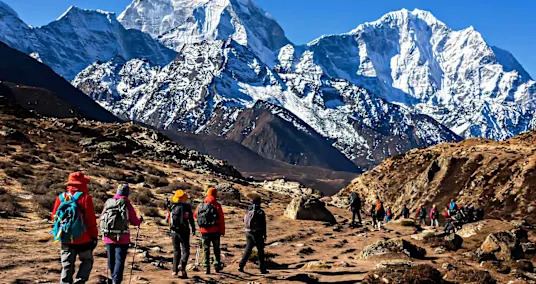
Reaching great heights of 10,000 feet, those who climb Mount Everest are often susceptible to altitude sickness—but Nepalese authorities found that the guides would purposefully put baking powder into climbers' food to mimic the common symptoms of altitude sickness, then feign the need for emergency services, the outlet reported, citing police.
Climbers were allegedly given diamox (Acetazolamide) tablets, which are used to treat and prevent altitude sickness, with "excessive" amounts of water, per the outlet.

Credit: Getty
"Altitude sickness is when your body doesn’t have time to adjust to lower oxygen availability higher up in the atmosphere," according to the Cleveland Clinic.

Credit: Zakir Hossain Chowdhury/Anadolu Agency via Getty
Never miss a story — sign up for PEOPLE's free daily newsletter to stay up-to-date on the best of what PEOPLE has to offer, from celebrity news to compelling human interest stories.
Helicopter companies, local hospitals and other organizations were also allegedly in on the scam, as the guides would falsify the need for emergency helicopter evacuations and further treatment, the Post reports. Era International Hospital allegedly took over $15.87 million, and Shreedhi International Hospital is alleged to have received over $1.22 million in connection with the falsified rescue operations, according to the outlet, citing the police investigation.
Mountain Rescue Service allegedly carried out 171 fraudulent rescues, which allowed it to collect $10.31 million from international insurance companies, according to the Post. Nepal Charter Service allegedly raked in $8.2 million for its part in the scheme, with Everest Experience and Assistance linked to $11.04 million in insurance claims, the outlet reports, citing police.
PEOPLE has reached out to Nepalese authorities for comment.
Read the original article on People
LATEST POSTS
- 1
 Jamie Dimon warns Iran war could drive inflation, interest rates higher
 - 2See the 'amazing' photos of Earth taken on historic Artemis II moon mission
- 3Israel scales back use of top missile interceptors as Iran barrages persist
- 4Why is the Artemis 2 rocket launch different from all other rocket launches?
- 5The last penny was pressed by the U.S. Mint in Philadelphia today. Could the nickel and dime be next?


- French rapper Gims placed under investigation for 'aggravated money laundering'
- This Overlooked Predator Is Running Out of Time—Why Conservationists Are Racing to Save the Striped Hyena
- Czech Republic caps fuel prices amid Iran war energy crisis
- A definitive Manual for the 5 Off-road Bicycles Available
- EU Commission prepares €90bn Ukraine loan despite Hungary's veto
- Spanish bishops and government sign deal for compensation of church sexual abuse victims
- Trouvez La Carte De Cr\u00e9dit Id\u00e9ale Pour Vos Besoins En Belgique
- I’m a neuroscientist who taught rats to drive − their joy suggests how anticipating fun can enrich human life
- Carina Nebula shines with white-blue stars | Space photo of the day for Jan. 5, 2026